Winterize vacation home cleaning is more than a last sweep before locking the door. It is the handoff between an occupied home and a property that may be quiet for weeks or months.
The cleaner that leaves an immaculate kitchen, dry bathrooms, empty bins and a documented room-by-room closeout has done more than improve appearance. They have removed the small, ordinary conditions that can become unpleasant surprises in a closed-up house: food residue, moisture, odors, dust, clutter and missed signs of a leak or pest entry.
Cleaning does not replace winterization by a licensed plumber, heating professional, electrician, insurer or property manager. It supports that work by giving the owner a dry, visible and well-documented starting point.
The closing principle: Clean it. Dry it. Document it. Then hand it off to the right winter-service plan.
This guide is for Massachusetts vacation-home owners, seasonal rental managers and second-home caretakers. It is not plumbing, heating, electrical, insurance or safety advice. Follow your property’s systems, manufacturer instructions, insurance requirements and qualified professionals for the technical close-down.
Start with the difference between a clean home and a closed home
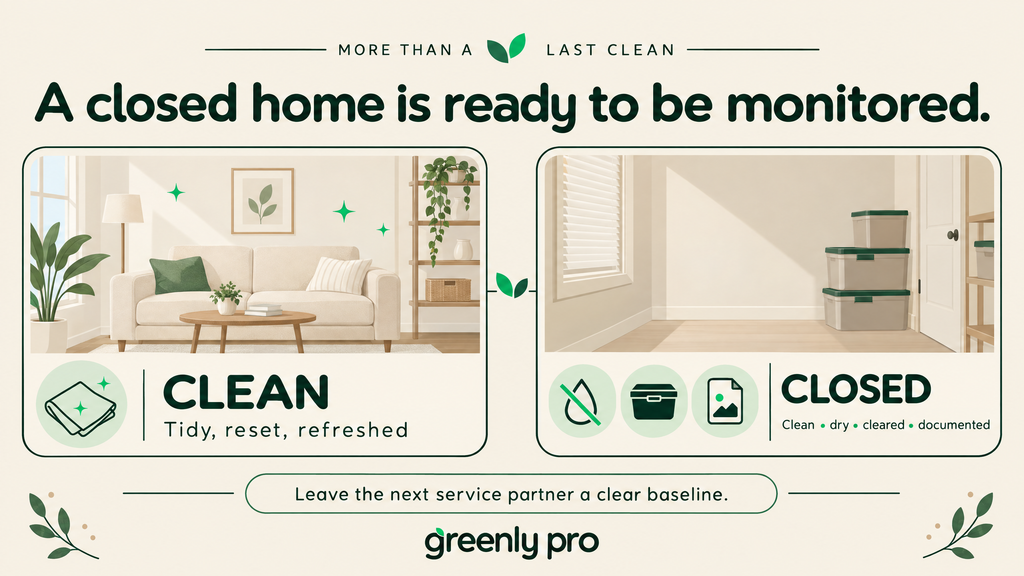
A home can look perfect at 4 p.m. on closing day and still be unprepared for winter.
A clean home has had visible surfaces, floors, bathrooms and kitchen areas cared for. A closed home has been cleaned, dried, cleared of perishable sources, checked for visible concerns and handed to a monitoring or service plan.
That distinction matters because winter problems are rarely caused by one dramatic moment. They usually begin with something small that had no owner: a damp mat, food left in a cabinet, an appliance door sealed shut while damp, a bin not removed, a roofline or window concern not documented, a service visit with no baseline for comparison.
Use four closure states for every room:
| Closure state | What it means | Why it matters |
| Clean | Soil, dust, food residue and waste are removed | Reduces odors, pests and unnecessary buildup |
| Dry | Wet surfaces, textiles and appliances are addressed before lockup | Moisture is easier to control before the home is vacant |
| Cleared | Perishables, trash and personal clutter that traps dust are removed or stored | Makes later inspection faster and more useful |
| Documented | Photos, notes and exception items are logged | Creates a starting point for check-ins and reopening |
Close the kitchen so it cannot create work while you are gone
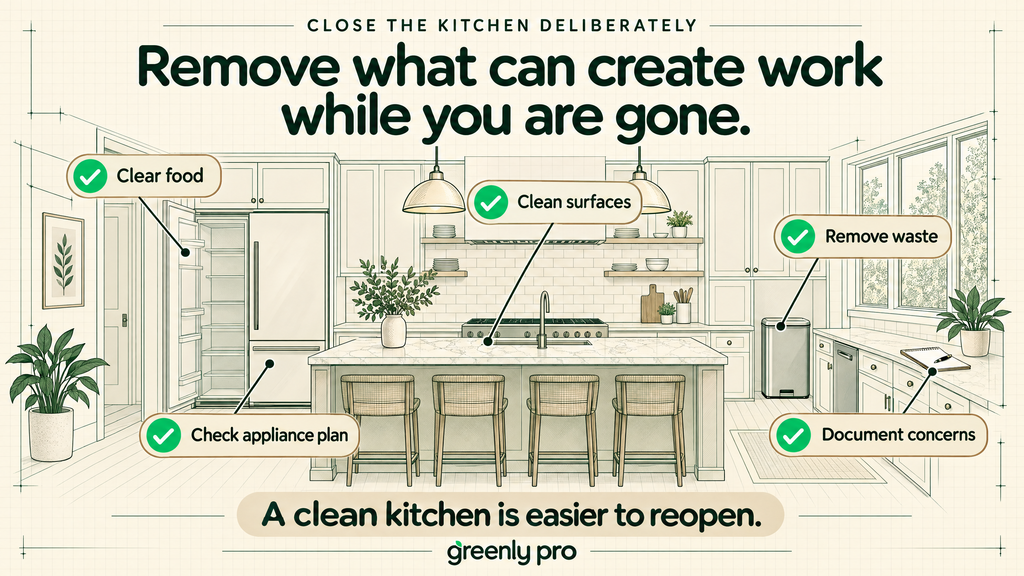
The kitchen is where a normal home can become an unpleasant vacant home fastest.
Start with food, not floors. Remove perishables and check cabinets, drawers, pantry shelves, refrigerator compartments and small appliances. A quick wipe over a counter does not help if crumbs remain in a toaster tray, food is left in a disposal area or a refrigerator holds a forgotten item behind a drawer.
Then clean the working surfaces: counters, sink, cooktop, microwave, oven interior as needed, dishwasher interior and exterior cabinet handles. Empty interior trash and recycling, clean the bins if necessary and remove bagged waste from the property.
Appliance shutdown is property-specific. If an owner plans to turn off, unplug, defrost or leave an appliance open, confirm the manufacturer’s instructions and the owner’s plan first. Travelers’ vacant-home guidance, for example, suggests cleaning and defrosting refrigerators and freezers, wiping them dry and leaving doors propped open when the appliance is being unplugged for a vacancy. That is a useful operational reference—not a substitute for the appliance manual.
Before leaving, photograph the kitchen and record any concern that is not routine cleaning: a slow drain, a water stain, a drip, a damaged seal, a pest sign or an appliance condition that needs the owner’s decision.
Treat moisture control as a cleaning issue before it becomes a remediation issue
Moisture does not become less relevant because no one is home.
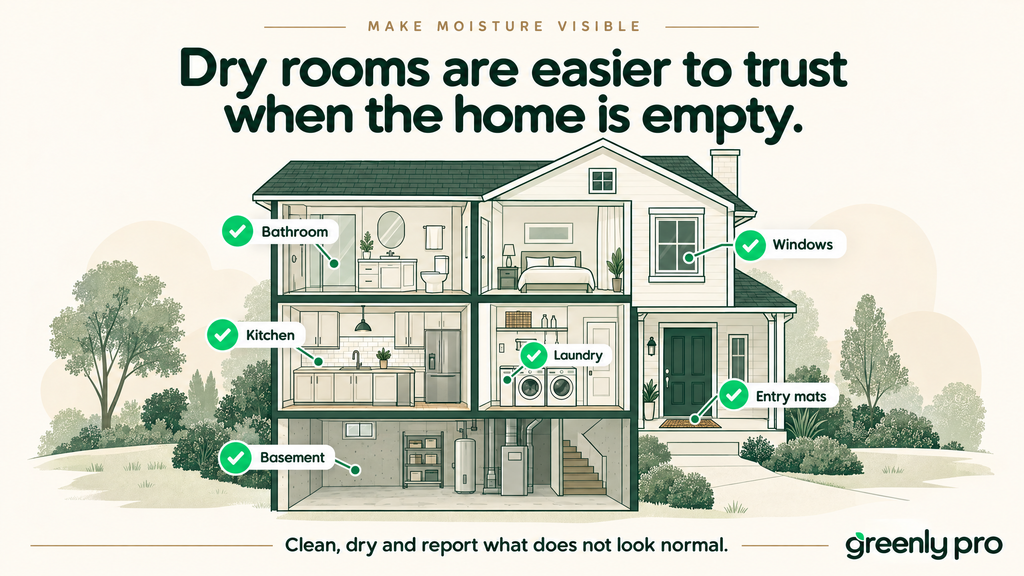
Bathrooms, laundry areas, kitchens, basements, window sills, entry mats and under-sink cabinets deserve a deliberate final look. Wipe wet surfaces dry. Launder and fully dry washable textiles. Empty standing water where it is safe and within the cleaning scope. Report condensation, staining, a musty odor, visible mold, an active drip or a damp material instead of covering it up with fragrance or a quick wipe.
The EPA’s mold and moisture guidance makes the core point plainly: moisture control is the key to mold control. It also says wet or damp materials should be dried within 24–48 hours after a leak or spill to help prevent mold growth.
That does not mean a cleaning crew should diagnose hidden mold or repair a water problem. It means the final clean should make abnormal moisture visible, logged and actionable before the house sits vacant.
A useful closeout question for every room is: Would a weekly property check notice a change here? If the answer is no because the space is cluttered, damp or undocumented, the closing process is incomplete.
Give bathrooms and laundry a separate closeout routine
Bathrooms and laundry rooms are where cleaning meets the plumbing plan.
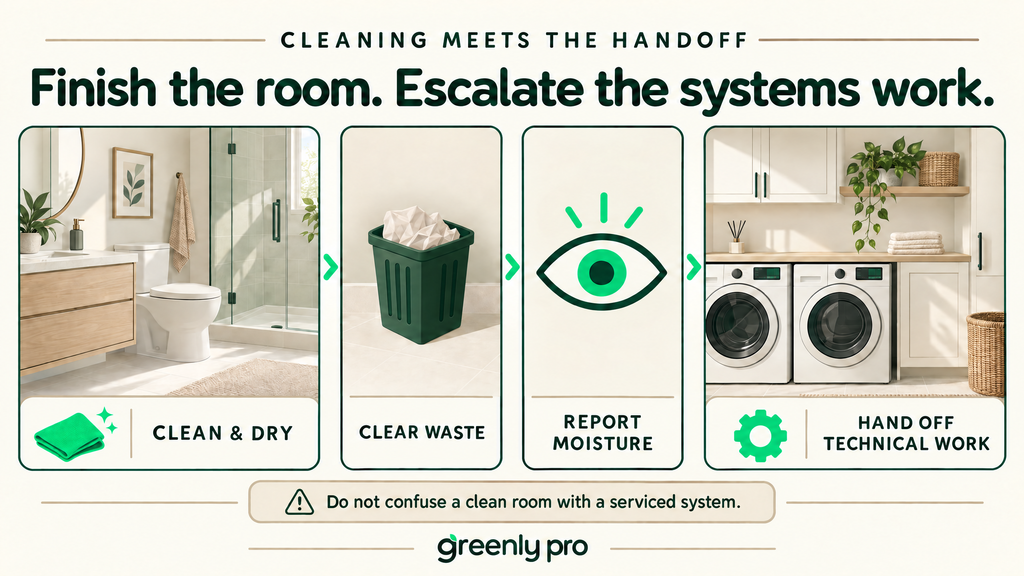
Within the cleaning scope, the goal is to clean and dry surfaces, clear waste, remove laundry, inspect for visible moisture and leave the room easy to check. That includes the sink, counters, toilet exterior, shower or tub surfaces, mirrors, floors, cabinet fronts, laundry appliance exteriors and lint around accessible dryer areas—without disassembling equipment or doing technical service.
Then the technical handoff begins.
The owner or designated licensed professional should decide whether water is shut off, plumbing is drained, heat is maintained or sensors are used. Do not assume a single method fits every property: older heating systems, fire-sprinkler systems, plumbing design and insurance requirements can change the correct plan.
Massachusetts’ Division of Insurance notes that freezing-related damage may be a coverage issue if adequate temperature was not maintained when it could have been. Its 2026 cold-snap guidance also recommends maintaining pipes and keeping a home adequately heated during extreme cold, while pointing owners to their insurer for coverage questions.
A cleaner’s closing report should state what was observed—not what was technically approved. For example: “Bathroom dry; no visible drip noted; owner-directed plumbing vendor scheduled,” rather than “home winterized.”
Clean soft surfaces and storage like the home will be opened by a guest
A closed vacation home holds onto whatever you leave behind.
Wash and completely dry linens, towels and washable throws before storing them. Vacuum rugs, upholstery and accessible edges. Remove food, candles, open toiletries, loose paper and cardboard that can provide clutter or attract unwanted attention. Wipe inside cabinets, closets and drawers where food, toiletries or seasonal gear accumulated.
Do not seal damp fabrics, damp shower mats or moist cleaning cloths inside a closet. Do not put a clean-looking but wet item into an airtight tote and call the room closed.
For premium homes, this is where the experience on reopening is won or lost. A guest who arrives to a dry, orderly property feels that someone anticipated the absence. A guest who finds stale linens, dust around bed edges or a closet that smells closed up knows the last visit was only a surface clean.
Use the final walk to surface concerns, not hide them
The final walkthrough should be slow enough to notice what the clean made visible.
Walk from exterior entry to kitchen, living areas, bedrooms, bathrooms, laundry, basement or utility-adjacent spaces, then back out. Look for the conditions a cleaning process can observe but should not repair:
- Window or door moisture, staining or a damaged seal
- Roof-leak signs, ceiling discoloration or damp drywall
- Pest evidence, unusual odors or access gaps
- A dripping fixture or visible supply-line concern
- A faulty alarm, low battery alert or sensor notification reported by the system
- A blocked or unsafe access route for winter check-ins
Massachusetts fire-safety guidance advises working smoke and carbon-monoxide alarms on every level of the home and outside each bedroom, and recommends annual professional checks of furnaces and chimneys. That is an owner and qualified-service responsibility, but it belongs on the closing coordination list.
The right response to a concern is a clear note, photo and owner notification. Cleaning should never disguise a leak, freshen a musty room without reporting it or put a damaged area back into service without approval.
Build one handoff sheet for cleaning, systems and check-ins
The strongest closing plan has one page everyone can use.
Not a long folder of disconnected vendor invoices. One current handoff sheet with who completed what, what needs follow-up and who has authority to make a decision.
| Workstream | Confirm before departure | Owner / escalation |
| Cleaning closeout | Kitchen, baths, textiles, waste, floors, visible moisture check and photo log | Cleaning lead / owner contact |
| Technical winterization | Water, plumbing, heat, fuel, electrical and sensors handled by the appropriate professional | Owner / licensed contractor |
| Exterior readiness | Gutters, access paths, outdoor furniture, exterior faucets and snow plan checked or assigned | Property manager / grounds contractor |
| Safety and security | Alarms, locks, keys, monitoring contacts and emergency numbers confirmed | Owner / security or monitoring provider |
| Winter check-ins | Visit cadence, report format and storm-response authority established | Property manager / owner representative |
Your insurer may set vacancy, heat, inspection or notification requirements that this checklist cannot replace. Review the policy directly with the agent or insurer. The Massachusetts Division of Insurance advises owners to check coverage and notes that winter-damage claims depend on the circumstances.
Make monitoring part of the cleaning promise
A closing clean is a moment. Property care is a loop.
If someone is checking the home during winter, give that person a simple baseline: clean-room photos, known exceptions, access instructions, owner contacts and a clear threshold for calling. A useful check-in report records conditions, not just attendance:
- Entry condition and exterior access
- Visible signs of leak, moisture, pests or odor
- Heat, alarm or monitoring alerts reported by the appropriate system
- Photograph of any exception
- Owner decision or next action
That makes the next visit more valuable. It also prevents the familiar question after a problem: “Was that already there?”
The practical closing timeline
Two to four weeks before closing: Confirm the owner’s technical winterization plan, insurance requirements, access list, alarm contacts and winter check-in provider. Schedule licensed professionals early.
One week before closing: Remove perishables, reduce clutter, identify repairs that could affect cleaning or moisture control, and confirm any owner instructions for appliances, linens, valuables and storage.
Closing day: Complete the room-by-room clean, dry wet areas, remove waste, photograph each room and log visible concerns. Do not certify technical systems you did not inspect or service.
Within 24 hours: Send the closeout report and photos. Confirm the professional winterization visit, lockup process and next scheduled check-in.
At reopening: Use the photo log as the return-to-service baseline. Check for changes first, then clean for arrival. A reopening clean should be responsive to what happened during the season, not a repeat of closing day.
A clean close gives care to winterize vacation home a clear starting point
A vacation property is easier to protect when its condition is clear.
The right cleaning closeout does not make claims about plumbing, heating or insurance. It makes the home dry, orderly, documented and easier for the owner’s winter-service team to monitor. That is the point: fewer unknowns, less avoidable work and a better first impression when the home opens again.
For vacation homes across Boston, Waltham, Burlington, Woburn and Braintree, Greenly PRO can build a closing clean around your property, access plan and winter-service handoff. Start at .com/estimate. You will receive a documented closing scope not a generic turnover.