
Spring is a time for profound renewal, extending far beyond blooming flowers and warmer weather. It’s an opportune moment to refresh our living and working environments, not just superficially, but with a deep commitment to health and sustainability.
Eco-friendly spring cleaning offers a powerful, dual-pronged opportunity: to significantly enhance indoor health and well-being, and to reduce our collective environmental footprint. This comprehensive guide delves into sustainable strategies tailored for both discerning homeowners and proactive facility managers, ensuring a fresh start that benefits occupants, operational efficiency, and the planet.
Green Cleaning for Homeowners

For many homeowners, spring cleaning has traditionally involved a formidable array of harsh chemical cleaners. These conventional products, while seemingly effective, often introduce volatile organic compounds (VOCs) and other toxins into the indoor environment, compromising air quality and posing potential health risks to families, children, and pets.
Embracing eco-friendly methods for your spring refresh means cultivating a healthier, safer home environment. It’s a conscious choice that aligns your household practices with a larger, more sustainable lifestyle, contributing to both personal well-being and planetary health.
1. Detox Your Cleaning Arsenal: Embrace Green Alternatives
The first step towards an eco-friendly spring clean is a critical evaluation of your current cleaning supplies. Retire products containing ammonia, chlorine bleach, phthalates, and synthetic fragrances, which are common culprits behind respiratory issues, skin irritation, and environmental pollution. Instead, transition to green alternatives. Look for products certified by reputable organizations such as Green Seal or the EPA Safer Choice program. These certifications assure that products meet stringent health and environmental standards, utilizing safer chemical ingredients without sacrificing performance. For a truly minimalist and budget-friendly approach, consider crafting your own DIY solutions. Simple, effective, and non-toxic cleaners can be made from common household ingredients: white vinegar for streak-free windows and descaling, baking soda for scrubbing and deodorizing, and lemon juice for natural bleaching and a fresh scent. These homemade options are not only effective but also significantly reduce plastic waste from packaging. [1]
2. Focus on Indoor Air Quality (IAQ): Breathe Easier, Live Healthier
Spring cleaning presents an unparalleled opportunity to address and significantly improve your home’s Indoor Air Quality (IAQ). Over the winter months, homes remain sealed, allowing dust, pet dander, mold spores, and various allergens to accumulate. A thorough spring clean should prioritize their removal. Begin by using a vacuum cleaner equipped with a HEPA filter, which is designed to capture 99.97% of airborne particles 0.3 microns in size, including pollen, dust mites, and pet dander. Regularly clean or replace your HVAC filters to ensure efficient air circulation and prevent the recirculation of pollutants.
Maximize natural ventilation by opening windows and doors on pleasant days, allowing fresh air to dilute indoor contaminants. Furthermore, integrate indoor plants known for their air-purifying capabilities, such as snake plants, spider plants, and peace lilies, which naturally filter toxins from the air. This holistic approach creates a fresher, healthier living space, reducing allergy symptoms and improving overall respiratory health. For more detailed seasonal tips, explore our “New England Home Cleaning Must-Dos: Spring Edition” and “Your Cleaning Checklist for Spring”.
3. Mindful Decluttering and Waste Reduction
Spring cleaning inherently involves decluttering, but the eco-conscious approach emphasizes mindful waste reduction. Before discarding items, consider their potential for reuse or recycling. Donate gently used clothing, furniture, and household goods to local charities. For items that cannot be donated, diligently separate recyclables (paper, plastic, glass, metal) according to local guidelines.
Establish a composting system for organic waste, such as food scraps and yard trimmings, to enrich soil and divert significant amounts of waste from landfills. In your cleaning routine, opt for reusable cleaning cloths, such as microfiber towels, instead of disposable wipes and paper towels. These small changes collectively make a substantial impact, significantly reducing landfill contributions and promoting a more circular economy within your home.
Green Cleaning For Facility Managers
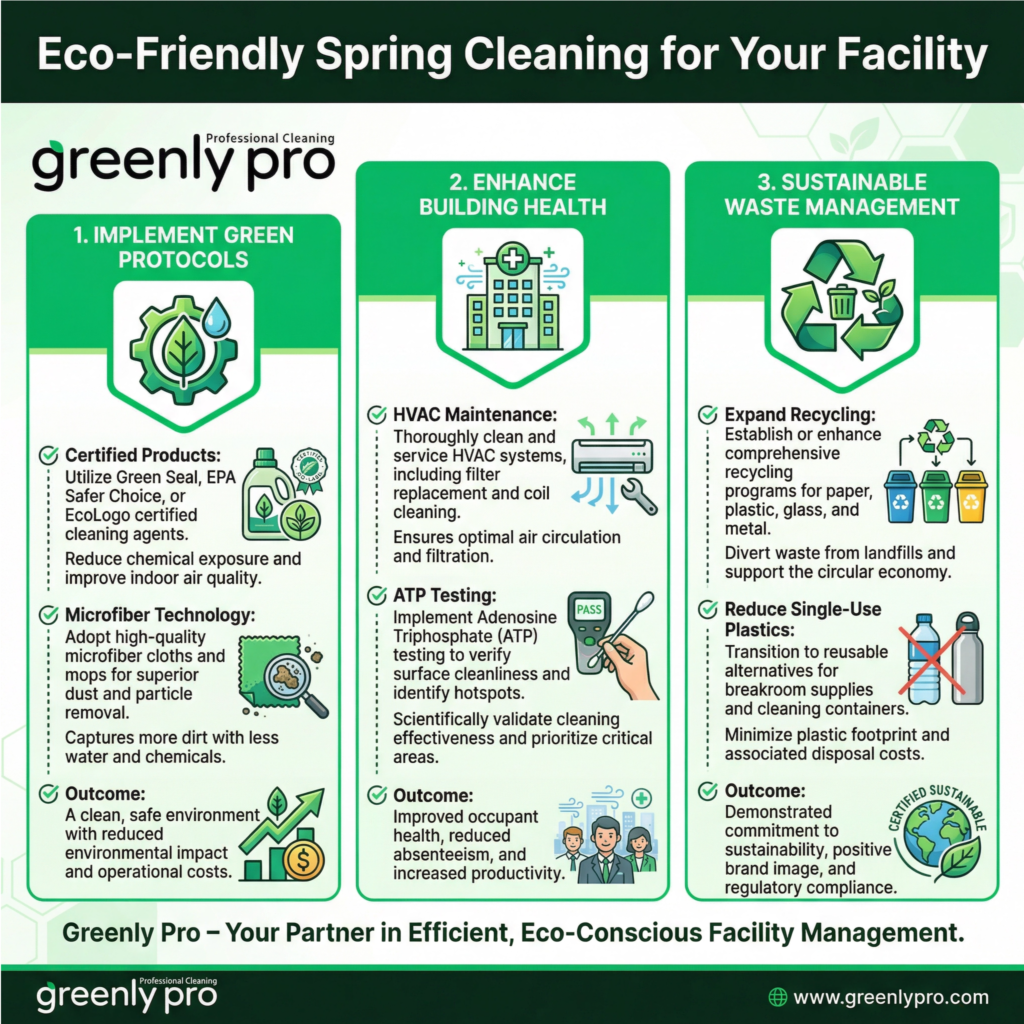
For facility managers, eco-friendly spring cleaning transcends mere aesthetics; it’s a strategic imperative that directly influences occupant well-being, operational costs, and an organization’s corporate social responsibility profile. [2] The demand for sustainable building practices is growing, with many property managers actively making the switch to green commercial cleaning services due to the tangible benefits in tenant satisfaction, property value, and regulatory compliance.
1. Implement Green Cleaning Protocols
Re-evaluating and updating your facility’s cleaning protocols is paramount for a truly eco-friendly spring. Integrate certified eco-friendly products and state-of-the-art equipment. This includes utilizing highly efficient microfiber systems, which require significantly less water and fewer chemicals than traditional cleaning methods, capturing more dirt and microbes. Invest in advanced floor care machines that minimize water consumption and chemical runoff. Crucially, provide comprehensive training for your custodial staff on proper green cleaning techniques, product dilution, and equipment usage. This ensures consistency, maximizes environmental benefits, and safeguards employee health. By adopting these protocols, facilities can achieve superior cleanliness while reducing their environmental impact and operational costs. For insights into overall facility planning, read “Why Cleaning is Your Most Underutilized Facility Planning Strategy”.
2. Enhance Building Health and Efficiency
Spring offers a prime opportunity to optimize building systems for enhanced health and efficiency. Conduct thorough HVAC system cleaning and maintenance, including ductwork inspection and filter replacement. This ensures optimal air circulation, reduces allergen and pollutant buildup, and improves energy efficiency. Implement Adenosine Triphosphate (ATP) testing to objectively verify cleanliness levels, especially on high-touch surfaces. ATP testing provides scientific data to identify hotspots and validate the effectiveness of cleaning protocols, moving beyond visual inspection.
Consider upgrading to energy-efficient lighting (e.g., LED) during deep cleaning cycles, which not only reduces electricity consumption but also contributes to a more pleasant indoor environment. These proactive actions significantly improve occupant health, potentially reducing absenteeism, and lead to substantial utility expenses savings. For more on maintaining healthy indoor environments, refer to our “Guide to Fall Air Quality: Protecting Your Home and Business with Eco-Friendly Solutions”.
3. Sustainable Waste Management
Evaluate and refine your facility’s waste streams to align with sustainable practices. Expand and clearly label recycling programs for paper, plastic, glass, and metal, making it easy for occupants to participate. Implement composting initiatives for organic waste generated from cafeterias, breakrooms, or landscaping, diverting valuable resources from landfills. Partner with waste management companies that prioritize sustainability and offer transparent reporting on waste diversion rates. A significant step is to reduce single-use plastics in cleaning supplies by opting for bulk concentrates and refillable dispensers.
This not only minimizes plastic footprint but also often leads to cost savings in procurement and waste disposal. Demonstrating a robust commitment to sustainable waste management enhances a facility’s brand image, attracts environmentally conscious tenants, and contributes to regulatory compliance. Green cleaning can also reduce operational costs significantly, with some reports indicating up to a 20% reduction through reusable materials and energy-efficient methods.
Your Partner in Eco-Friendly Spring Cleaning
Greenly Pro is not just a cleaning service; we are dedicated partners in fostering healthier, more sustainable environments. We provide superior eco-friendly cleaning solutions for both homes and businesses across the Boston area. Our expert teams are meticulously trained in the latest advanced green products and sustainable practices, ensuring a deep clean that is safe for people, pets, and the planet. We help you achieve a truly clean, healthy, and environmentally responsible space, transforming your property into a beacon of sustainability. Partner with Greenly Pro for a spring refresh that not only aligns with your values but also enhances your property’s long-term value and appeal.
Eco-friendly spring cleaning is far more than a seasonal chore; it’s a strategic investment in health, sustainability, and efficiency. By consciously adopting these practices, homeowners can create profoundly healthier and safer living environments for their families. Simultaneously, facility managers can significantly enhance their property’s value, appeal, and operational longevity, while meeting growing demands for corporate social responsibility. Embrace this opportunity for a truly fresh, green, and impactful start to the season, paving the way for a healthier and more sustainable future for all.