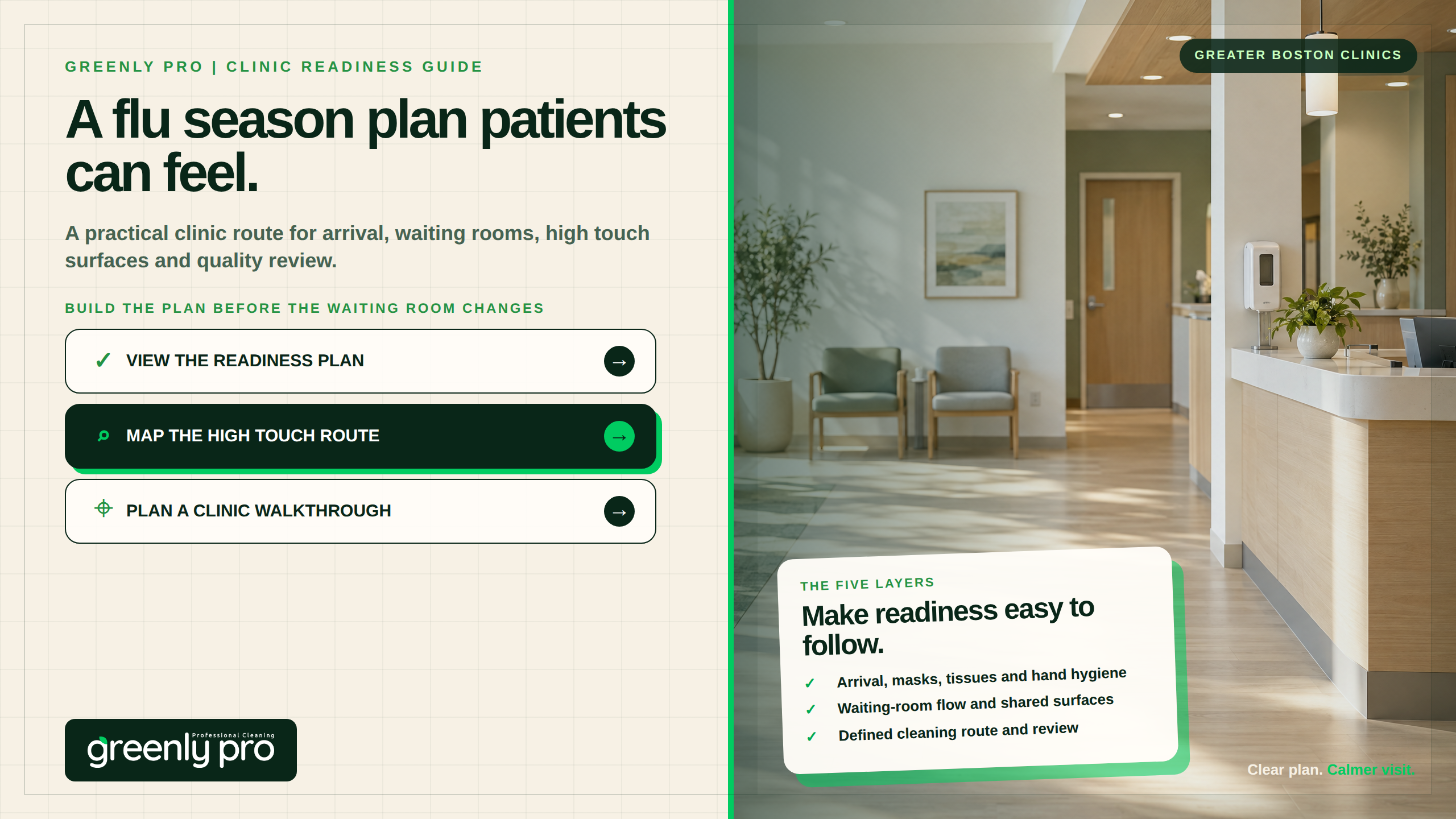
Flu season clinic cleaning should run as part of a layered respiratory-virus plan, not as a separate disinfection project. Start with the patient arrival path. Make it easy to report respiratory symptoms, find a mask, dispose of a tissue, and clean hands. Then use a written route for waiting rooms and other shared spaces, with clear ownership, approved products, label-directed contact time and a documented quality check.
That plan matters because a waiting room can become busy before anyone notices it has changed. A few more coughing patients, a later running schedule, an empty tissue dispenser or a missed reception counter can create friction for staff and patients quickly.
Cleaning is necessary. It is not the full flu-season answer. CDC describes influenza prevention in healthcare as a combination of vaccination, respiratory hygiene, management of ill healthcare personnel, infection-control precautions, environmental measures and engineering controls.
For Boston and Greater Boston clinics, the practical aim is simpler: make the safer choice easier at the entrance, keep the waiting room calm and supplied, give the cleaning team a visible route, and let clinical leadership own the clinical decisions. A flu season clinic cleaning plan should make those responsibilities easy to see during a busy day.
Flu Season Clinic Cleaning Begins Before the First Appointment
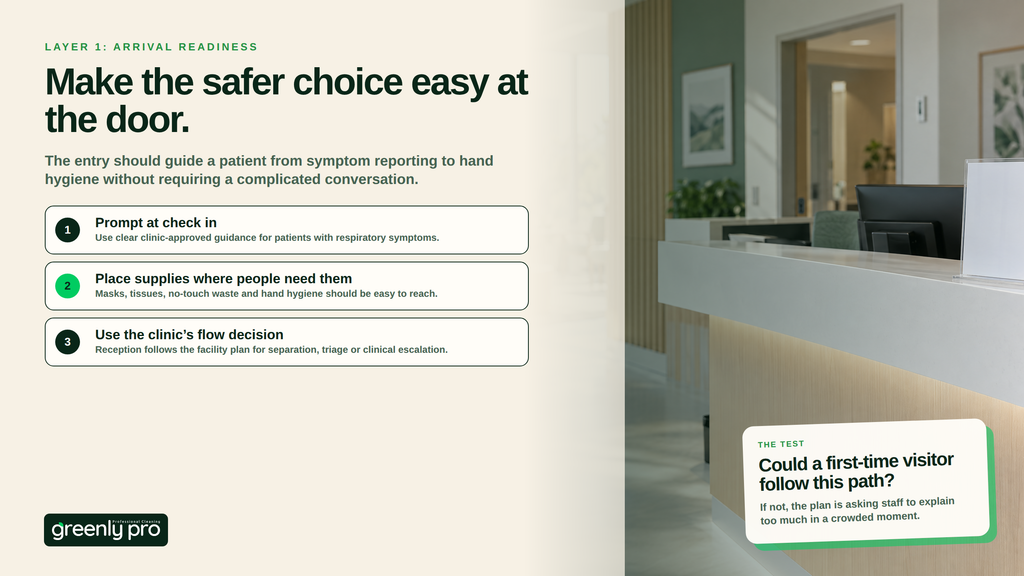
The most useful cleaning route starts with the patient journey rather than a supply closet. Walk it before flu activity rises in your area.
Start at the door. Is there a clear, readable prompt telling people with respiratory symptoms what to do at check-in? Are masks, tissues, a no-touch receptacle and hand sanitizer where someone can use them without asking? Does the reception team know what to do when a patient reports cough, fever or a recent respiratory exposure?
CDC recommends placing visual alerts in entrances and waiting areas, providing masks for people with respiratory symptoms, supplying hand hygiene at arrival and giving symptomatic people space away from others. During increased community influenza activity, facilities can consider triage that helps identify and separate patients with symptoms.
Massachusetts DPH also advises supporting respiratory hygiene, cough etiquette and hand hygiene from the first contact with a potentially infected person, including visual alerts in appropriate languages.
A written plan does not make the clinic rigid. It removes the decisions staff would otherwise have to improvise in a crowded moment.
Design the Waiting Room for Lower Friction and Lower Exposure
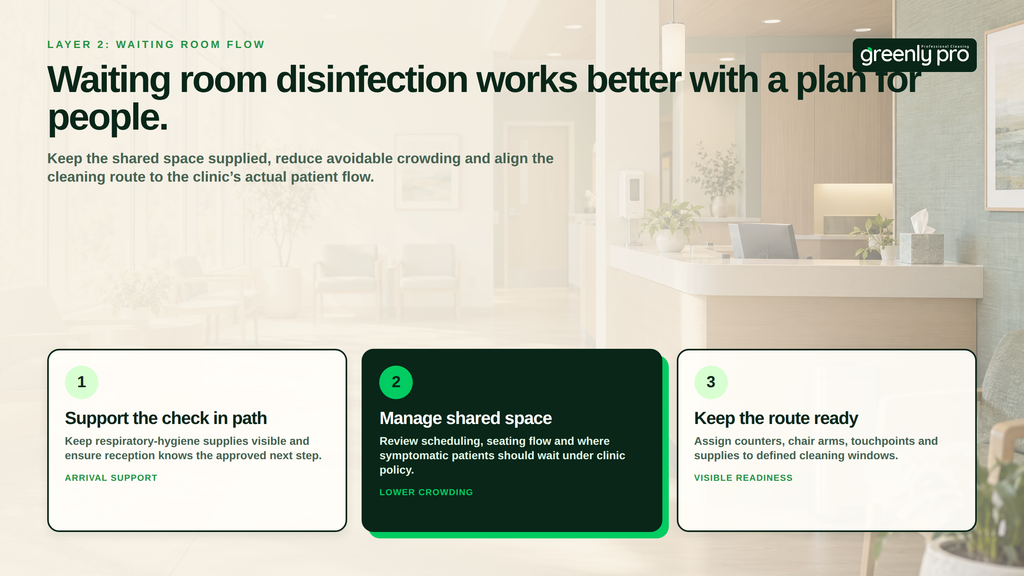
Waiting room disinfection matters, but the layout and arrival process matter too. A beautifully disinfected counter does not solve a crowded room where symptomatic patients sit shoulder to shoulder while waiting to be seen.
Review appointment scheduling during periods of elevated respiratory activity. Can the clinic limit crowding in common spaces? Can check in move more quickly? Is there a location where a person with respiratory symptoms can wait apart from other patients when your facility plan calls for it?
CDC’s current respiratory-virus guidance advises clinics to limit crowding in communal spaces, encourage symptomatic people to sit away from others or in a separate room when possible, and consider screening and triage during periods of greater community transmission.
This is not a cleaning company decision. It belongs with the clinic’s infection-prevention and operations leaders. The cleaning plan should support it by keeping the entry, seating areas, counters and hand-hygiene stations ready for the process the clinic has chosen.
Map High Touch Surfaces in the Clinic You Actually Have
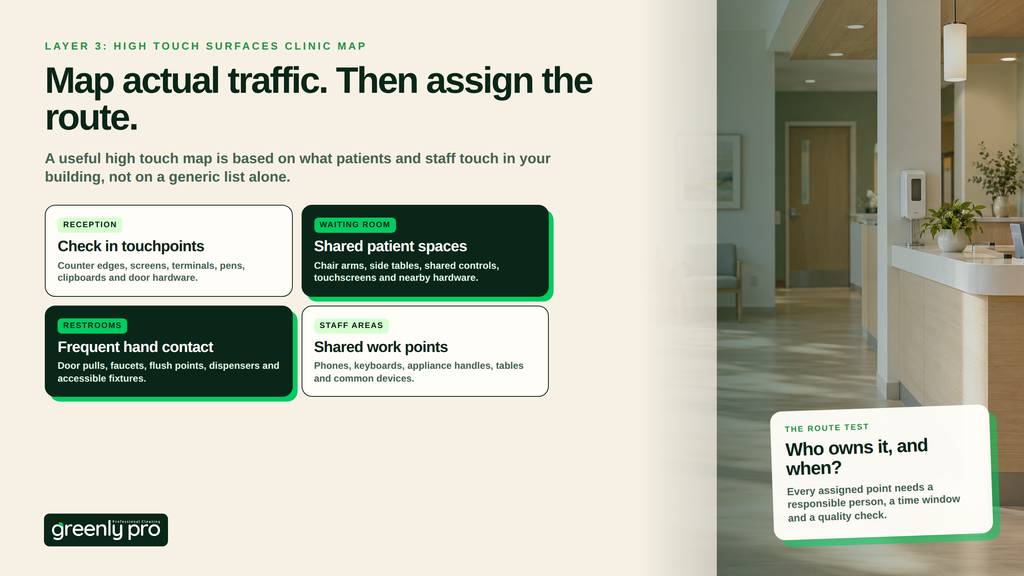
A generic high-touch checklist is a good starting point. It is not a finished route.
Observe your own traffic. At reception, that may include counter edges, payment terminals, pens, clipboards, touchscreens, door hardware and plexiglass frames. In the waiting room, it may include chair arms, side tables, elevator buttons, water dispensers, restroom hardware and shared device controls. In staff areas, it may include refrigerator handles, microwave controls, keyboards and shared phones.
The point is not to treat every surface as equally risky. The point is to identify the surfaces that many hands actually touch and assign them to a real person and time window. CDC’s outpatient checklist calls for written environmental-cleaning policies that identify responsible personnel. It also calls for routine monitoring and feedback.
Create a route that distinguishes three things:
- Routine shared-space work such as entry, reception, waiting room, restrooms and staff areas.
- Patient-care environmental work that follows the clinic’s written policies and room use.
- Clinical or restricted tasks that are not part of the external cleaning team’s assigned role.
This is how high-touch surface clinic planning becomes dependable instead of a last-minute list on a wall.
Make Waiting Room Disinfection Match the Product Label
More product is not a better process. The right process follows the product label.
EPA explains that a disinfectant’s registration number is the reliable way to identify the product, even when products are sold under different names. The label also tells the user where it can be used, how it should be applied and how long the surface must remain visibly wet for the product to work.
For a flu season clinic cleaning plan, that means the team should know four things before the shift starts:
- Which product is approved for each surface and setting.
- Whether soil must be removed before disinfectant is applied.
- The label contact time for the intended use.
- When the surface can return to normal use under the product directions.
CDC says standard cleaning and disinfection procedures are adequate for influenza environmental control when frequently touched surfaces or objects are precleaned as needed and disinfectants are used for their indicated contact times.
Do not use a product name as the whole protocol. A complete route identifies the surface, method, responsible person and verification step.
Define the Boundary Between Environmental Cleaning and Clinical Work
The flu season clinic cleaning team should not be asked to guess at clinical responsibilities.
The facility’s policies should define who handles patient-care turnover, reusable devices, medication areas, sharps, body-fluid spills, isolation or examination-room precautions and any task that requires clinical authority or facility-specific training. The CDC outpatient checklist specifically includes written policies for environmental cleaning and a policy or procedure for blood or body-fluid spill decontamination.
That does not limit the cleaning plan. It makes the plan safer.
A capable service partner can keep the assigned environmental route consistent, report a concern, pause when the task is outside scope and follow the clinic’s escalation path. Greenly PRO’s medical cleaning company checklist is useful when a clinic needs to write those boundaries into the vendor agreement before flu season begins.
Give the Team a Seasonal Shift Plan, Not a Vague Reminder
“Pay extra attention to high-touch areas” sounds sensible. It is not a plan.
Write down what changes when respiratory-virus activity rises. The clinic may add a check of hand-hygiene supplies at opening, increase attention to waiting-room touchpoints during busier windows, use a communication rule for a spill or symptom-related concern, and review any missed work before closing.
The exact schedule should reflect the clinic’s traffic, services, local conditions and infection-prevention policy. It should not be copied from a different clinic. One location may need a mid-day waiting-room reset. Another may need focused support around a pediatric rush or a high-volume check-in period.
CDC advises that the personnel who clean and disinfect patient-care areas receive training before independent work, annually and whenever new equipment or protocols are introduced. It also calls for competency checks, documented audits and feedback.
That gives a practical standard for a contractor too. The team should understand the written route, have access to the right supplies, know who to contact when the route changes and receive feedback when the work does not meet the clinic’s plan.
Use a Trigger to Review the Plan, Not Fear to Rewrite It
A flu-season plan should be reviewed when the local picture changes, not only after complaints appear.
CDC recommends using local and facility information to guide respiratory-virus measures, including community levels, trends, local health-department data and patient visits for respiratory symptoms. Its 2026 seasonal reminder also calls for checking that vents are unblocked and HVAC is functioning as intended.
For a clinic, that can mean a short weekly review during the season:
- Are respiratory symptom visits changing?
- Are hand sanitizer, masks, tissues and receptacles consistently stocked?
- Is the waiting room becoming crowded at predictable times?
- Are the assigned high-touch surfaces and clinic tasks being completed and checked?
- Does the cleaning route still fit the clinic’s operating hours?
The review belongs with operations and infection-prevention leadership. The cleaning partner contributes observations and service records. That is a better feedback loop than asking the team to disinfect more often without a reason or a defined outcome.
Build the Plan Before the Waiting Room Feels Different
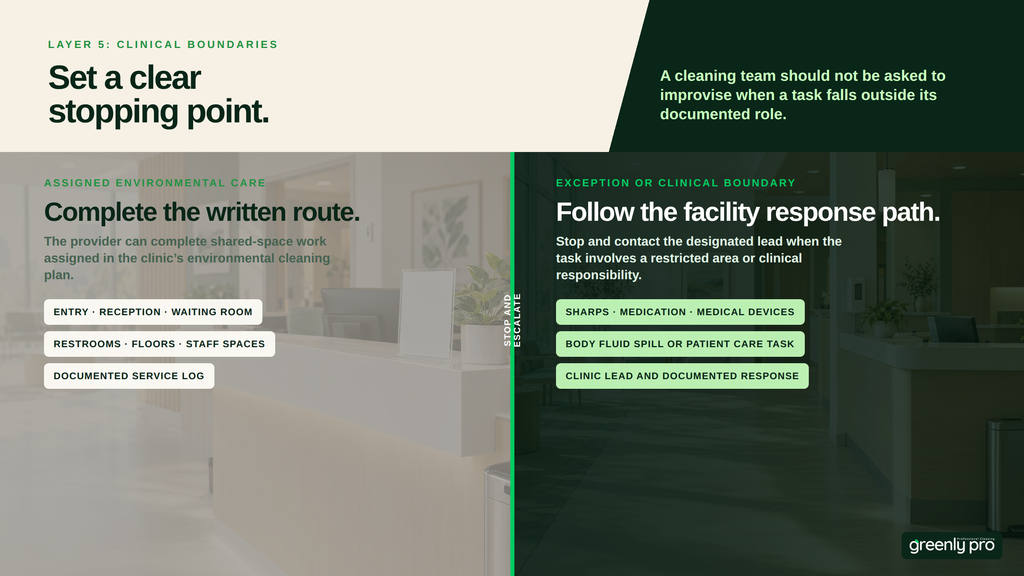
A strong flu season clinic cleaning plan is visible at the front door and understandable behind the scenes. It connects patient flow, supplies, environmental cleaning, clinical boundaries and quality review.
Use the printable flu season clinic readiness checklist to review your waiting room, cleaning route and vendor scope before respiratory-virus activity rises. It is a planning tool, not a replacement for the clinic’s infection-prevention program or clinical protocols.
For Greater Boston clinics that want help building a structured environmental-cleaning scope around their actual patient flow and hours, request an estimate at greenlypro.com/estimate. Greenly PRO can start with a walkthrough, a written shared-space route and the practical handoffs needed for dependable service.
For related scope guidance, see Greenly PRO’s healthcare facility cleaning resource and procedure room cleaning guide.