Office Deep Cleaning Frequency is a critical strategic consideration for any high-performing workspace. In the bustling commercial landscape of Boston, a clean office isn’t just about aesthetics; it’s a strategic imperative. Yet, many businesses, from startups in the Seaport to established firms in the Financial District, often overlook the fundamental question: How often should your facility undergo a comprehensive deep clean? The answer isn’t a simple one-size-fits-all, but understanding the optimal Office Deep Cleaning Frequency can significantly impact your bottom line, employee well-being, and brand reputation.
At Greenly Pro, we understand that the perception of cleanliness often masks a deeper reality. A quick wipe-down might make surfaces look clean, but it rarely addresses the hidden reservoirs of pathogens, allergens, and grime that accumulate in high-traffic commercial environments.
This superficial approach carries a “Hidden Tax” – a silent drain on productivity, increased sick days, and accelerated asset degradation. To understand this further, explore Why Cleaning is Your Most Underutilized Facility Planning Strategy.
Commercial Deep Cleaning for Modern Offices
Before we delve into frequency, let’s clarify what “deep cleaning” truly entails. Unlike routine janitorial services that focus on daily tidiness, deep cleaning is a comprehensive, systematic process designed to eliminate dirt, dust, and pathogens from every nook and cranny. For a detailed comparison, see our guide on Deep Cleaning vs. Regular Cleaning in Boston: What’s the Difference?. It’s about restoring your office environment to a state of optimal hygiene and extending the lifespan of your valuable assets.
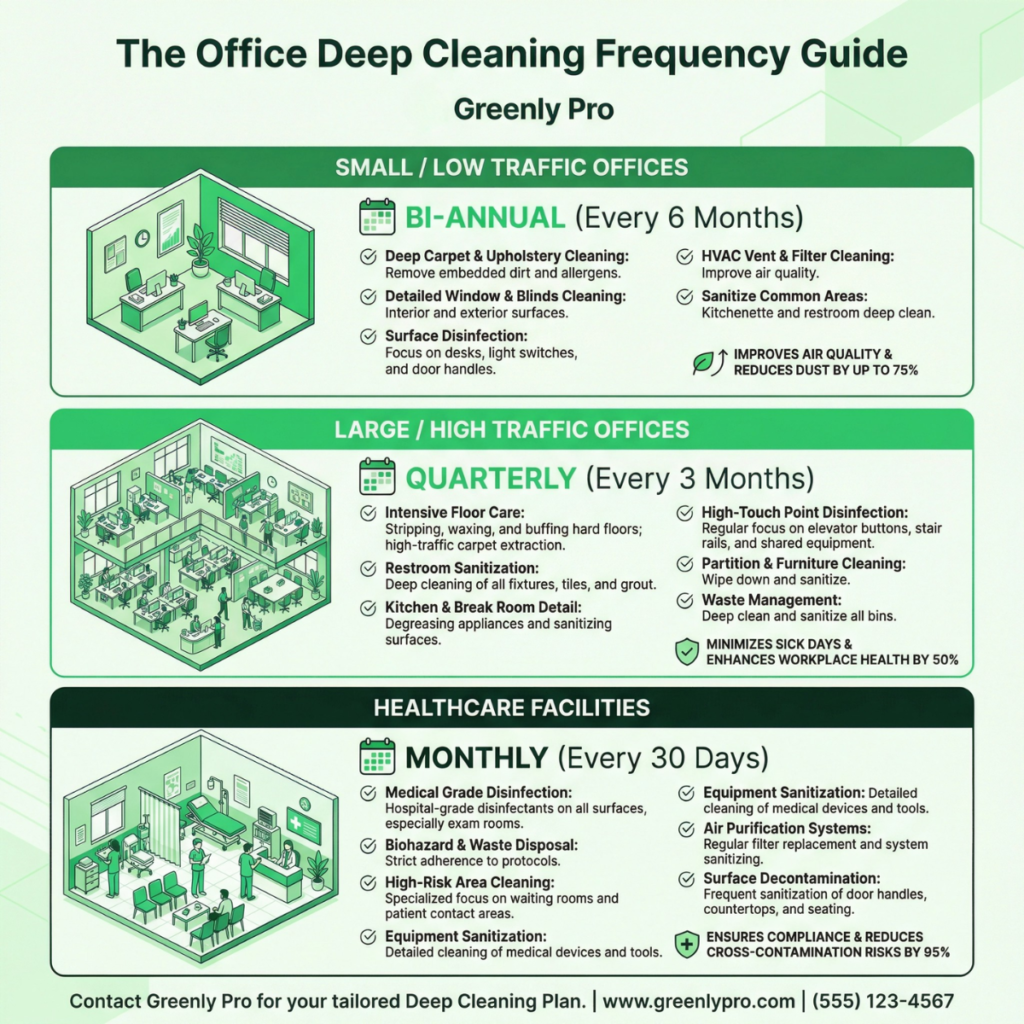
Key elements of a professional office deep clean include:
- High-Touch Surface Disinfection: Thorough sanitization of doorknobs, light switches, elevator buttons, shared equipment, and workstations.
- Carpet and Upholstery Extraction: Deep cleaning to remove embedded dirt, allergens, and stains, improving indoor air quality and appearance.
- Ventilation System Cleaning: Dust and allergen removal from air vents and diffusers to optimize HVAC performance and air quality.
- Restroom and Kitchen Sanitization: Intensive cleaning and disinfection of all fixtures, surfaces, and appliances to eliminate bacteria and odors.
- Detail-Oriented Dusting: Reaching high ledges, baseboards, light fixtures, and behind furniture.
- Window and Glass Cleaning: Streak-free cleaning of interior windows and glass partitions.
This meticulous approach goes far beyond what regular cleaning can achieve, creating a healthier, safer, and more productive workspace.
Tailoring Your Deep Cleaning Schedule
So, how often should offices be deep cleaned? The optimal frequency is a dynamic calculation influenced by several factors:
1. Office Deep Cleaning Frequency by Office Size and Foot Traffic
- Small to Medium Offices (Low Traffic): For offices with fewer employees and minimal client visits, a bi-annual (twice a year) deep clean is often sufficient. This allows for thorough maintenance without excessive disruption.
- Large Offices (High Traffic): Bustling corporate headquarters, co-working spaces, or offices with frequent client interactions may require quarterly (every three months) deep cleaning. High foot traffic accelerates the accumulation of dirt and pathogens, necessitating more frequent intervention.
2. Office Deep Cleaning Frequency by Industry and Business Type
- Healthcare & Medical Offices: Due to stringent health regulations and the presence of vulnerable individuals, these environments often require monthly or even more frequent deep cleaning, alongside daily rigorous sanitization. [1]
- Educational Institutions: Schools and universities, with high occupancy and frequent interaction, benefit from quarterly deep cleans, with additional focus during breaks and holidays.
- Restaurants & Food Service: Kitchens and dining areas demand monthly deep cleaning to comply with health codes and prevent pest infestations.
- General Corporate Offices: Most standard office environments fall into the quarterly to bi-annual range, depending on the specific factors outlined here. For insights into premium standards, refer to What’s Class A Buildings Cleaning Standards? A Guide for Boston Property Managers..
3. Employee Health and Wellness Initiatives
Companies prioritizing employee health and aiming to reduce sick days should consider more frequent deep cleaning. A study by the CDC highlights the significant impact of a clean environment on reducing the spread of illness. Regular deep cleaning, especially with eco-friendly products, contributes to superior indoor air quality, which directly correlates with reduced absenteeism and increased productivity.
4. Special Events and Seasonal Changes
- Post-Event Deep Cleans: After large conferences, client events, or holiday parties, an immediate deep clean is crucial to restore the space and eliminate any accumulated grime or potential pathogens.
- Seasonal Deep Cleans: Aligning deep cleans with seasonal changes, such as Eco-Friendly Spring Cleaning: Healthier Homes & Facilities or Fall Deep Cleaning: Why timing matters for Carpet Cleaning and Health, can be highly effective. Additionally, consider our Guide to Fall Air Quality: Protecting Your Home and Business with Eco-Friendly Solutions for comprehensive seasonal care. Spring deep cleans can tackle winter’s accumulated dust and allergens, while fall deep cleans prepare the office for the colder months when windows are closed and indoor air quality becomes paramount. [4] [5]
Strategic Hygiene for Optimal Performance
At Greenly Pro, we don’t just clean; we implement a Strategic Hygiene Model designed to optimize your office environment for health, productivity, and asset preservation. This model is further elaborated in Why Cleaning is Your Most Underutilized Facility Planning Strategy. Our approach goes beyond conventional cleaning, integrating:
- Eco-Friendly Solutions: Utilizing EPA Safer Choice and Green Seal certified products that are effective yet safe for your employees and the environment.
- Healthcare-Grade Protocols: Applying advanced disinfection techniques to ensure a truly healthy workspace, reducing the risk of illness transmission.
- Data-Driven Validation: Employing ATP testing to provide objective proof of biological cleanliness, ensuring measurable results and transparent accountability.
- Customized Schedules: Developing a deep cleaning frequency tailored precisely to your office’s unique needs, traffic patterns, and industry requirements.
By partnering with Greenly Pro, you’re not just investing in a cleaning service; you’re investing in the long-term health, productivity, and value of your business. Our comprehensive approach ensures your office doesn’t just look clean, but is clean, from the air your employees breathe to the surfaces they touch.
Don’t let the “Hidden Tax” of superficial cleaning compromise your business. Discover the Greenly Pro difference and implement a deep cleaning strategy that truly supports your team and your assets.
Contact Greenly Pro today for a customized deep cleaning assessment and schedule.